
Footprint Optimization
Distributor redesigns Texas footprint to lower cost-to-serve while maintaining service.
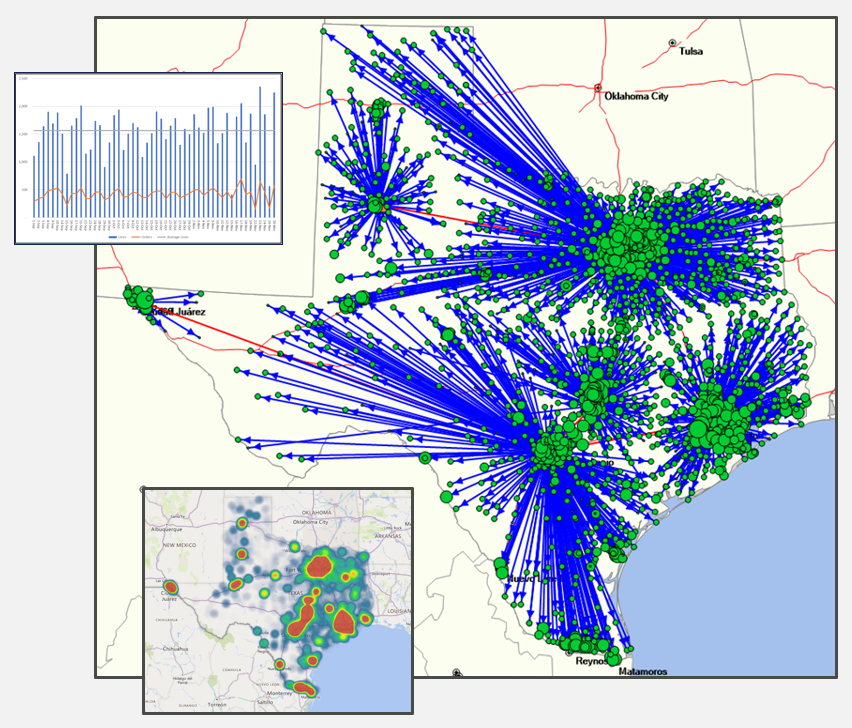
A regional wine and spirits distributor partnered with SCPI to redesign its Texas distribution footprint after rapid growth and geographic expansion strained a legacy 3-DC network and dense multi-stop delivery routes. SCPI built a total cost-to-serve model across transportation, warehousing, and inventory, then scenario-tested DC configurations and crossdock strategies across demand profiles to balance service coverage, route density, and risk.
The result was a two-DC strategy with targeted cross-docks, resilient Texas-wide coverage, and reduced cost-to-serve.

Challenge
- Rapid Texas expansion outgrew a legacy 3-DC network and dense delivery routes.
- Leadership needed scenario evaluation to balance cost-to-serve, service coverage, and risk.

Approach
- Built a total cost-to-serve model across transportation, warehousing, and inventory.
- Scenario-tested network and cross-dock alternatives across demand profiles to balance service, route density, and risk — then defined a transition roadmap.

Results
- 2 DC with targeted cross-docks.
- Service continuity with resilient Texas coverage.
- 8% CTS savings vs. current.